Showing posts with label Lore. Show all posts

Thursday, October 22, 2026

My Take on Masterwork Weapons

Recently, a player asked if there's a way to "upgrade" their equipment or buy better weapons. 

My eyes went black. 

"Upgrade?" I shouted. "Better equipment?" 

I jumped from my seat and knocked over a bowl of chips. 

The group went quiet. I pointed my finger in the players face and then slammed it on the table, where a copy of Moldvay Basic happens to be open to page B27. 

"You see where it says 'sword?'" 

He nodded. 

"That's every sword. This isn't some video game where you ditch your iron weapon once you find a steal one. The 'sword' on the equipment list is every sword. Every quality. Every make." 

I leaned in so close my breath fogged his eyes.  

"And that's is the only one you get." 

The player started to sob. 

I cleared my throat and addressed the table. "If you want a better weapon, find a magic one." 

---

But something in me recognizes this is an unsatisfactory answer. It wasn't the first time someone raised the question in one of my campaigns. Some part of me suffers from the same addled mindset, conditioned by video games to place starting gear at the lowest rung of an imagined equipment hierarchy. 

At first I borrowed masterwork weapons from 3.5e, one of the rules which occasionally surfaces in my mind when I think back to those halcyon days pouring over D&D for Dummies at the local library as a recently literate youth. 

A masterwork weapon is a mundane (meaning nonmagical) weapon of the highest quality, granting +1 to attack with no bonus to damage. 

This makes total intuitive sense. A weapon of the highest quality weapon should absolutely be more effective than a standard one, even if it's not magically enhanced. Masterwork weapons make great boss weapons and treasure, and also preserving magic weapons' majesty. The fantasy of an enchanted blade is somewhat dimmed if every fancy schmuck had one. 

But, as many a past girlfriend will tell you, I have a tendency to make things more "complicated" than they "need to be." So I figured, why stop at a flat +1 when situational yet substantial bonuses are more exciting? 

High situational bonuses provide tactical justification for keeping a variety of weapons, reduce mundane weapon redundancy once magic weapons are in the picture, and grant circumstantial advantages which can shape how players approach combat. And if Dark Souls taught us anything, it's that people love learning about a world through 1–3 sentence item descriptions. 


Masterwork weapons are limited in supply, so won't be able to outfit war bands or mercenary troupes with them. In the olden days masterwork weapons might have been easier to manufacture, but in these benighted times such advanced weaponry is rare and coveted. 

Each weapon is valued at 50x the price of their mundane counterpart, with some variation from seller to seller.

  • ! next to a damage dice indicates exploding damage — an additional dice is rolled on a max result.
  • i next to a damage dice indicates imploding damage — an additional dice is rolled on a 1.
  • Silver weapons harm were-beasts and add +2 to damage rolls against foes with supernatural HD.

Swords

Crab Sword (1d8, +2 to attack foes armed with one-handed weapons)
A dashing weapon favored by the pirates of the Seething Coast. The pincers on the guard are designed to catch enemy weapons.
Sold along the Seething Coast

Hivelander Estoc (1d8, +2 to attack insects and heavily armored foes)
An overlong tine-like blade, built to find its way through the thickest carapace and heaviest plate.
Sold in the Hivelands

Sickle Sword (1d8, +2 to attack humanoid foes, +1 AC penalty)
The hook-like swords of the Suul nomads are a pure extension of their fast and ruthless fighting style.
Traded by the Suul nomads

Elven Flyssa (1d6!, unencumbering, Elves can fire it from a bow)
Elven arms are to human weapons as calligraphy is to a child’s script. The elegance of this sword cannot hide its bite.
Traded by Elves

Regal Dueling Sword (1d6, +1 to NPC reactions)
The ornate dueling swords of the Nevelornian nobility are as decorated as they are deadly. Wearing one is a sign of imposing sophistication.  
Sold by private weapons dealers in Nisk and Linrik

Two-handed Swords


Flamberge
(1d10, +2 to attack armed foes)
The strikes from this wavy, flame-like blade send severe turbulence down a foe’s weapon. Considered by some a dishonorable sword, by others overly theatrical—but none speak against its efficacy. 
Offered as a prize at the traveling Mirthfair

Beast Hunter’s Blade (1d10, silver, +2 to attack animal-type foes)
Every detail of this weapon, from its serrated edge to its secondary cross guard, is included solely for the purpose of slaying night-stalking beasts.
Sold by the old hunters of Cainwick

Daggers

Cat’s Claw (1d4!)
A slim dagger styled after one carried by a legendary thief. Despite its simple appearance, few smiths can achieve the subtle curvature of the blade.
Sold by thieves' guild dealers if you tell them the right passcode

Caber (1d4, returns to the wielder when a thrown attack is missed)
A curious throwing knife shaped such that it returns when thrown. Crafting one and catching it without losing a finger is a rite of passage in Tulk culture.
Traded by the Tulk barbarians

Bistoury (Does not deal damage. Instead, foes with equal or fewer HD than the damage roll save vs. death or die)
A small, extremely sharp knife used by contract killers and headsmen. Impractical for all but throatslitting.
Sold at the black markets in Nisk and Vellaine   

Spears

Lion Spear (1d6i, +2 to attack charging foes and foes ogre-sized or larger)
Its heavy head accounts for nearly half of the mighty spear’s length. Carrying one won't make you courageous, but it can certainly help.
Sold by the old hunters of Cainwick

Telescopic Spear (1d6, collapses down to the size of a dagger)
A trick spear with a spring-loaded interlocking mechanism. Ostensibly for easy storage, but just as easily concealed. 
Sold by the tinkerers of Imbre

Falarica (1d6, can be filled with flaming oil or alchemical substances to disperse on hit)
The head of this spear is designed with a special globe-shaped chamber to release incendiary charges on its target.
Found on old battlefields

Axes

Headhunter (1d8, +2 to attack foes with less than 10 hp.)
A wicked axe with a concave head designed for swift decapitations.
Offered as a wager by cocky (or desperate) headsman in the city of Velaine

Barbarian Axe (1d8i)
The Tulk forego decorating their formidable axes. The might of their weapons speaks for itself.
Traded by the Tulk barbarians. 

Ogring Axe (1d8, +2 to attack foes ogre-sized or larger)
The preferred weapon of the legendary giant-slayers of Ogrehead. The design based on those carried by the very ogres these axes were made to slay.
Sold by the weaponsmiths in Ogrehead

Hand axes

Whorlbat (1d6, tethered to the wielder; may be retrieved the round after throwing)
A distinctive throwing axe attached to a sturdy chord. Additional blades protrude from the head at odd angles.
Sold by the weaponsmiths in Ogrehead

Lantip Axe (1d6, +2 to attack foes in rank formation)
Where this axe swings, a skirmish line breaks. The Lantip knights were a marvel to behold on the battlefield, yet after the Seven Wars none remain to pass on their legacy.
Found on old battlefields  

Maces


Aspergillum (1d6, silver, can be filled with holy water to disperse on a successful hit)
A ceremonial weapon used as often in rituals as for vanquishing the foes of Law.
Sold to Clerics of at least 3rd level at the Holy Fortress

Halfling Shillelagh (1d6i, roll 1d12 when damage implodes, Halflings can sunder to avoid one attack)
Too short for a human to use as a walking stick, but it packs a wallop all the same.
Traded by Halflings

Skull Mace (1d6, -1 to enemy morale)
The glowering skull mace-head is said to doom those it strikes.
Sold in secret in the catacombs under the Holy Fortress

Hammers

Lucerne (1d6, +2 to attack heavily armored foes) The four-pronged head of this hammer punches through armor with ease. In the days before the Seven War period, the knights of old Nevelorn were thought to be invincible. New weapons were devised to do away with that myth. Sold by the weaponsmiths of Ogrehead

Dwarven Hammer (1d6, can be thrown like a handaxe, Dwarves wielding one may charge as if mounted)
A sturdy hammer so well-balanced it feels like it swings itself.
Traded by Dwarves

Crossbows

Balestrino (1d6, 40’/80’/120’, unencumbering. Can be fired with one hand.)
A compact crossbow granted remarkable strength due to its flexible mithril construction. Built to be concealed, but beautiful enough to show off.
Sold in the black market and by private weapons dealers in Nisk 

Gearbow (1d6, holds six bolts at a time. Three bolts can be fired at once, adding +3 to the damage roll.)
An ingenious loading mechanism allows this crossbow to hold multiple bolts at once and fire in quick succession.
Sold by the tinkerers of Imbre

Bows


Nomad Bow (1d6, range 100’/200’/300’, no bonus for close range and no penalty for long range attacks)
They say the Suul archers are limited only by how far they can see.
Traded by the Suul nomads

Bow lance (1d6, deals 1d4 damage in melee combat. Treated as a spear when unstrung.)
The Tulk add metal points to the end of their bows for when the quiver runs empty or foes are too near to shoot. Such stark pragmatism embodies the barbarians' approach to life.
Traded by the Tulk barbarians. 

Thursday, July 31, 2025

The hills have arms (and they're beating your ass)

Elementals

Certain ideas are on their face kind of lame or frustratingly executed, but have a kernel of something resonant that keeps bringing you back. It's like the flaws are there to taunt you, challenging you to fix them. 

Old school D&D is like that. BX is a terrific game with enough tremendous flops and oversights that designing house rules and derivative systems has essentially become a hobby in and of itself.

D&D elementals also fall in this category. People have been providing new rules, alternative interpretations, and added texture for decades. Chris Hogan has a good writeup on why elementals are boring and what can be done about them, and it's from way back in the day when people started their posts with a Captain Planet reference (it's good though and you should read it. No one posts like that anymore). 

A lot of people go in the direction of adding layers nuance to elementals and changing the baseline assumptions. This post from Scrap Princess has been knocking around my brain for years, and even though I haven't found a use for it in my game it's a welcome addition to my mental ecosystem. "Gravity fire" is a good example of the kind of radical direction people take the elemental concept.

I like this approach a lot, but when you change elementals too much it requires a lot more buy-in from the players. The baseline concept for elementals is so easy to grasp it almost feels too straightforward, but hear me out: A wildfire is scary, but a sentient wildfire that's trying to kill you, specifically, is terrifying, exhilarating, and somewhat absurd—perfect for a D&D game. Living tornados and walking earthquakes might not be the most glamorous (certainly underserved by the official art) but damn it they can be fun too. They're like those OSR-style challenges we all go crazy for but with hit points. 

The problem is, nothing about this is reflected in the stats. We're led to believe elementals are living  flames/winds/water/earth but you can walk right up to one and whack it with a sword? And the only risk you run is being targeted by its one attack per round? Something's not right here.

This is just a side-note before I move on, but a point I've never seen mentioned before is the monster listing for elementals in both O and AD&D imply they are only the stats for conjured elementals (either by staff, spell, or device). The AD&D Monster Manual even goes so far as to specify more sophisticated elementals exist "than can be summoned." Over time, these "conjured elementals" became the standard all-purpose elemental, leading to the uncomfortable middle ground we have today where they're kind of mindless bag-of-hitpoint monsters but are also supposed to be the dominant lifeform on their respective plane, which supposedly all have their own cultures and civilizations.   

What D&D does well

Conjured elementals map neatly to things high-level characters will do, namely aerial adventures, seafaring adventures, domain-level stronghold sieges, and messing around with large quantities of fire.

When a magic-user conjures an elemental it requires their full concentration to maintain control. This implies elementals are like bound spirits held against their will, which is very on-theme. Elementals summoned by druids don't turn on their masters, probably because they asked nicely. 

Little details about how elementals’ size changes based on their power and how fire and earth elementals are obstructed by channels of water are nice and lend some tactical depth for keen parties to leverage. 

Treating elementals as extraplanar entities instead of constructs gives elementals an appropriately numinous quality, even if their statblocks don’t measure up. 

In AD&D, certain spells require the presence of an elemental or become stronger if an elemental is used in their casting. This is only true for earth and air elementals (distance distortion and move earth for earth, call lightning for air) but there’s a lot of potential for this to be expanded. Magic-users conjuring planar beings to aid their spellcasting is exceptionally evocative and I’ll most definitely steal that idea. 

This is how elementals work now

Elementals are formed when essence from the planetary lifestream is sequestered in base matter—in the D&D world, this means fire, water, earth, and air, instead of like atoms or whatever. 

Digression: There's no elemental plane of air/fire etc. There is only one elemental plane, and it surrounds and touches this one at all points. The elemental plane—wizards call it the Plane of Elemental Anima, capitalized—is where the world's living essence exists in tangible form. It's also the place where beings like animistic nature spirits, djinns, and all those weird elemental monsters from the Rules Cyclopedia like helions and the kryst reside. Barbarians call the elemental plane the "Godrealm," as that is where their many heathen deities originate. 

Conjured elementals, generally, should not be dealt with as typical monsters. Mundane weapons are useless, and magical weapons only deal minimal damage unless specifically designed to harm enchanted or extraplanar creatures. Damage to an elemental's corporeal form is just reconstituted from the surrounding element.

The most common way to defeat an elemental is by depriving it of its matter. Cut off a water elemental from its source, trap a wind elemental in a vacuum, uproot an earth elemental, deny a fire elemental access to fuel. 

Smart players would go after the commanding MU to break their concentration. You'd think most MUs have contingencies in place to prevent this from happening, but evil wizards have a habit of underestimating plucky adventurers.

The easiest way to handle an elemental is by commanding another to fight it or casting a spell of banishment. The problem is, this requires collaboration with powerful MUs and/or clerics, who are rare, expensive, and hard to get along with in equal measure. 

Elementals also have utility, believe it or not, outside of combat. Their life essence can be channeled to manipulate their native element. [design note: RAW conjured elementals exist indefinitely until slain or dismissed. I like the idea of using elementals for non-combat activities but if they last forever they would be too useful and unbalance the game. Exchanging hp for more capabilities is my compromise.]

Here are the stats to make conjured elementals more like the primordial forces of nature they ought to be: 

Air

Appearance ideas
8 HD:  Airborne debris flying like a starling murmuration
12 HD: A screaming, whirling disk of silvery cloud-stuff. Whizzes around recklessly.  
16 HD: A storm cloud serpent with thunderbolt wings 

AC 2/0/-2 Att. +7/+9/+11 blow (1d8/2d8/3d8) Mv. 360'(120') flying Saves: as HD Morale: 10 Alignment: Neutral
  • Must be conjured under the open sky.
  • Deals an extra 1d8 damage to flying foes. 
  • Creatures less than 2 HD in melee range must save vs. death each round or die from suffocation.
  • In place of doing damage, hit creatures up to ogre size can be flung 1d4x10' in any direction, taking fall damage as applicable. 
  • Dissipates if trapped indoors or in other enclosed spaces.
Additional powers
  • Thunderclap. Costs 2d8 hp. Releases a concussive burst that can be heard for miles; creatures within 50’ must save vs. breath or take 2d12 damage and be deafened and stunned (half movement and -4 to attack rolls) for 2d6 rounds, half damage on a success.
  • Tailwind. Costs 2d8 hp per hour. Allows sailboats and aerial vessels to move at 1.5x speed.

Earth 

Appearance ideas
8 HD: Upper body like a man, lower body like a giant earthen slug 
12 HD: A slouched ape figure with arms thick as tree trunks 
16 HD: A seismic wave-hill that drags itself on four giant pillar-like appendages 

AC 2/0/-2 Att. +7/+9/+11 blow (1d8/2d8/3d8) Mv. 60'(20') moves freely through unworked earth Saves: as HD Morale: 10 Alignment: Neutral
  • Must be conjured from raw dirt, stone, sand, or clay.
  • Deals an extra 1d8 damage to structures and foes on the ground.
  • In place of attacking, can create a tremor that causes everyone in 20' to fall over and save vs. paralysis or take 1d6 damage. 
  • Cannot cross a water barrier wider than their HD in feet.
  • Dissipates if uprooted from the earth. Explosives harm earth elementals, as does falling, which kills them outright. Large scale excavation equipment deals normal damage—a human with a shovel won't do anything, but a giant with a giant shovel is a different story.
Additional powers
  • Liquefaction. Costs 2d8 hp. The ground in a 30’ radius becomes quicksand.
  • Land formation. Costs 3d8. The elemental forms itself into a shape of whoever commands its choosing (wall, pillar, small hut, etc.). Total volume of earth available to manipulate is 400/600/800 cubic feet. The elemental is inert while shaped (yet still conscious), and must lose another 3d8 hp to return to its original form. MUs still need to maintain concentration while an elemental is shaped, or else it will slip from their control and revert to its original form. 

Fire

Jon Silent

AC 2/0/-2 Att. +7/+9/+11 blow (1d8/2d8/3d8) Mv. 120'(40') Saves: as HD Morale: 10 Alignment: Neutral

Appearance ideas
8 HD: Hundreds of small flaming figures dancing and leaping, their heads like tiny stars.
12 HD: A riotous vortex of fire unfurling like a rose.
16 HD: A plasma toroid hovering ominously above the ground.
  • Must be conjured from a roaring fire of at least man-height.
  • Automatically damages foes in melee range. Ignites flammable material.
  • Cannot cross a water barrier wider than their HD in feet.
  • Loses 2 hp each round it lacks access to fuel (dry firewood, oil, etc.).
Additional powers
  • Combust. Costs 2d8 hp. Deals an amount of damage equal to hp lost to every creature within 30’, save vs. spells for half. Any amount of additional hp may be spent to bolster the effect.
  • Primordial crucible. A fire elemental can be bound in order to reduce the time (but not the cost) of creating a magic item by 1 week per HD. There's a 10% chance each week the elemental escapes from it's binding and attacks it master, ruining the magic item in the process. The elemental dissipates once the magic item is created, and can be dismissed at any time—for example, an MU can decide that after shaving 8 weeks off a 6-month project they don't want to risk it any more, they can dismiss their elemental and work the remaining 4 months alone. 

    Water

    Appearance ideas
    8 HD: Wriggling mass of transparent worms
    12 HD: A broad ribbon of water, gently swaying
    16 HD: A roiling black water leviathan with glassy sheen, flecked by sparks of bioluminescence

    AC 2/0/-2 Att. +7/+9/+11 blow (1d8/2d8/3d8) Mv.  60’(20’) on land, instantaneously disperses and reconstitutes anywhere in a 180’ radius while in water. Saves: as HD Morale: 10 Alignment: Neutral
    • Must be conjured from a body of water no smaller than a pond or creek.
    • Deals an extra 1d8 damage to foes in water.
    • A water elemental can attempt to surround and submerge a foe by moving into the space it occupies. Save vs. paralysis or be restrained by the elemental and unable to breathe (losing consciousness in 2 rounds). On a successful save the creature is pushed back 10’. 
    • Dissipates if more than 60’ from its water source.
    Additional powers
      • Phase change. Costs 1d8 hp. Elemental becomes mist, ice, or turns back to water. It can freeze around submerged foes, trapping them and inflicting 1d6 damage as they get crushed by expanding ice.
      • Maelstrom. Costs 1d8 hp per round. Elemental creates a giant whirlpool that sucks boats and traps aquatic creatures. Potentially surfaces submerged treasure or awakens abyssopelagic sea monsters.


      Monday, April 7, 2025

      How I'm doing thieves' cant from now on

      Jasper, this month, is the Word. 

      Jasper is the pass/code/warning that the Singers of the Cities (who, last month, sang “Opal” from their divine injuries; and on Mars I’d heard the Word and used it thrice, along with devious imitations, to fix possession of what was not rightfully my own; and even there I pondered Singers and their wounds) relay by word of mouth for that loose and roguish fraternity with which I have been involved (in various guises) these nine years. It goes out new every thirty days; and within hours every brother knows it, throughout six worlds and worldlets. Usually it’s grunted at you by some blood-soaked bastard staggering into your arms from a dark doorway; hissed at you as you pass a shadowed alley; scrawled on a paper scrap pressed into your palm by some nasty-grimy moving too fast through the crowd. And this month, it was: Jasper. 

      Here are some alternate translations: 

      Help! 

      or 

      I need help! 

      or 

      I can help you! 

      or 

      You are being watched! 

      or 

      They’re not watching now, so move! 

      Final point of syntax: If the Word is used properly, you should never have to think twice about what it means in a given situation. Fine point of usage: Never trust anyone who uses it improperly.


      From "Time Considered as a Helix of Semi-Precious Stones" by Samuel Delany

      Wednesday, July 31, 2024

      Some gods of Chaos

      I had a player express interest in seeing a list of deity options available for his chaos cleric so I put together a list based on a bunch of ideas I've been sitting on. Here it is, adapted from the handout I added to the hallowed archives of our game's email thread: 

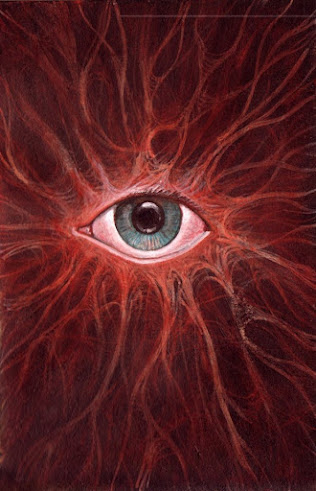
      The Burning Eye

      Purview: Madness, paranoia, delusions, psionics, and corrupting knowledge.
      Other titles/incarnations: The Eye of Terror, the Fear, the Red Gaze
      Symbol: An eye aflame, usually with a pinprick red pupil encircled by a blue iris.
      Boon: +10%/level chance of having psionic powers and you get to test every time you level up. +5% experience if you have at least one Psionic number on your sheet.
      Constraint: Between adventures, must spend at least 1 day/level tending to your manias, nursing migraines, and doing similar activities that prevent you from more productive ventures.
       

      Rintrah

      Purview: Wrath, rebellion, discord, vengeance, and conflict.
      Other titles/incarnations: Abaddon, Breaker, the Bloodied One
      Symbol: A bloody fist, typically emblazoned on bronze.
      Boon: +10% experience from combat
      Constraint: Offenses against you cannot be forgiven.
       

      Clopan

      Purview: Fortune, trickery, absurdity, and mirth. Also associated with insubstantial signifiers and imperfect representations.
      Other titles/incarnations: Lady Luck, Old Quicksilver, the Fool
      Symbol: Any trinket or object of value the bearer deems a token of good luck functions as a symbol of Clopan. The major cult of Clopan employs the image of a two-thumbed hand (like the gonzo fist) clutching a coin.
      Boon: +5% experience from carousing
      Constraint: Must never back down from an earnest wager.

      The Faceless God

      Purview: Mutability, transience, mutation, and oozes.
      Other titles/incarnations: Changer, Juiblex, the Great Glistener
      Symbol: Green slime, usually in a small vial worn around the neck.
      Boon: +5% experience when you have 3 or more mutations.
      Constraint: Must not maintain a fixed identity (followers interpret this differently; some do everything in their power to diminish their ego, others invent a new persona every few months, etc.)

      Orcus

      Purview: Ruin, entropy, decay, and undeath. Ruler of Sheol, the psychotropic ur-dungeon at the bottom of creation. 
      Other titles/incarnations: The Rotting One, the Goat, Lord Ruin
      Symbol: Goat skull
      Boon: +1 to rebuke undead rolls
      Constraint: Must sacrifice a creature of hit dice equal or greater than yours before you can level up.

      The Queen of the Night

      Purview: Darkness, the occult, witchery, and beauty.
      Other titles/incarnations: The Lady of Darkness, the Silent Queen, the Occulted One.
      Boon: Extra 1st level spell slot. Can use magic-user scrolls in addition to those for clerics.
      Constraint: Must keep as much about yourself a secret as possible. For every intimate detail someone knows about you, they get +1 to saving throws against your magic.

      Idnach

      Purview: Predation, instinct, brutality, and might. The mother of monsters.
      Other titles/incarnations: Tiamat, Angrboða, the Great Serpent.
      Symbol: A claw or fang marked with the eight-pointed star of chaos.
      Boon: Natural weapon. Your unarmed attacks deal 1d4 damage. 
      Constraint: Must eat a portion (typically the heart, but it doesn’t matter) of every mortal creature you kill. 
       

      Notes 

      • There are several reasons why I wanted to make these.
      1.  Chaos is cool, and Chaos Lords are very cool. Outlining the main Chaos deities (for surely there are more) gives me the opportunity to define what chaos is for my campaign—chaos is madness, chaos is wrath, chaos is mutability, and so on. Chaos for my campaign is not so much like the Ruinous Powers from Warhammer, which represent an antagonistic force so terrible that even the most cruel and inhuman alternatives can be justified. Yes Chaos are the bad guys, but I wanted to provide conceptual space for chaos to be a benevolent force as well as the villain, and not just in edge cases.
      2. These provide neat frameworks for thinking. With the seven themes of chaos come seven potential cults, seven different evil high priests, seven potential classes of demons, mutations, artifacts, etc. That's a pretty deep well to draw from. Also hopefully they are compelling to the players. First and foremost I want them to be excited to play around with these guys.
      3. More defined deities reign in Chaos-aligned PCs so they don't just play chaotic stupid every time. This hasn't been too much of a problem for our game so far, though the campaign is still young and there have already been a couple entertaining yet headscratching moments.
      • I wanted to make the boons rather minor, and I think I succeeded. Some people think small static bonuses are boring, but I appreciate them as a tool to suggest the presence of a modifying factor without swinging the balance of the game too much. 
      • I like the term "constraint" more than "restriction" for Chaos clerics. "Restrictions" feel too much like a Law thing for me. 


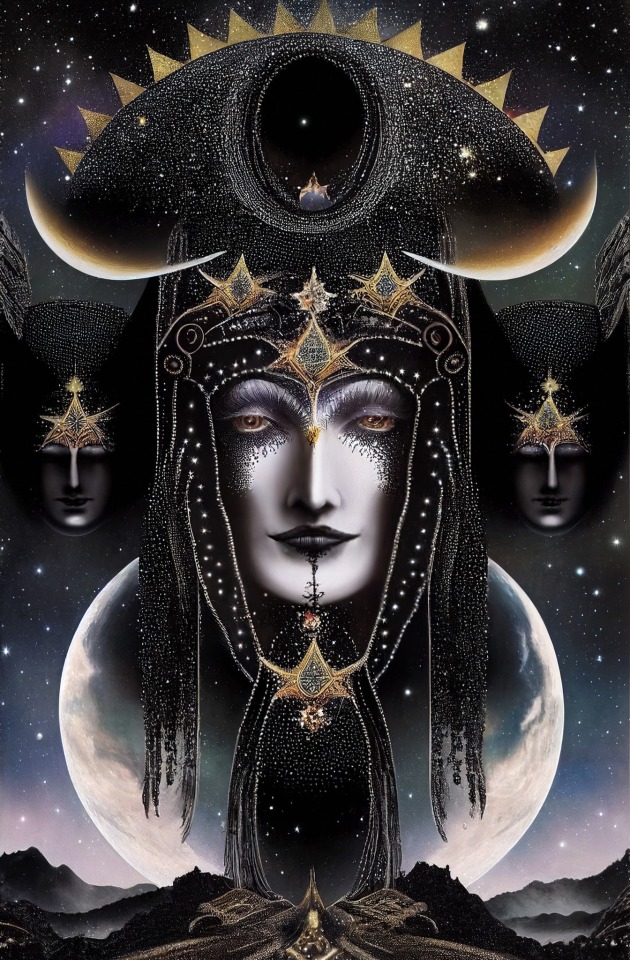
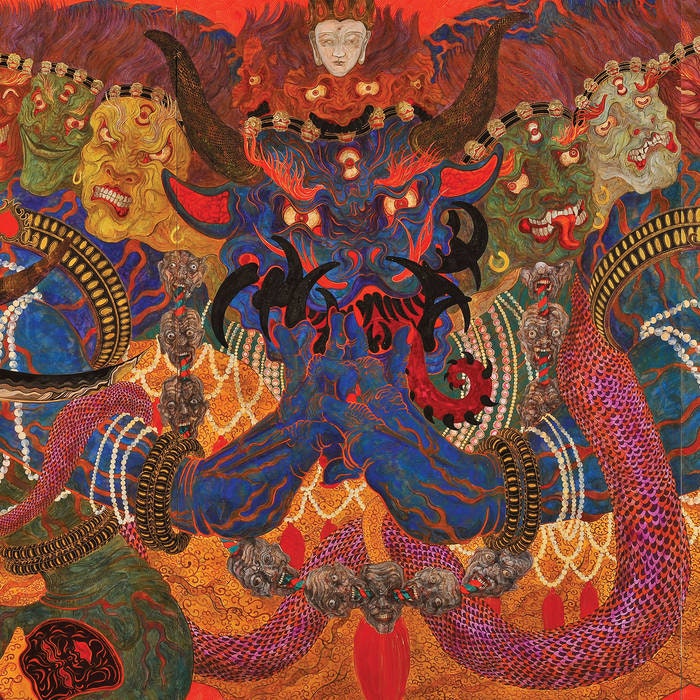
      Image sources, in order:
      1 Talon Abraxas
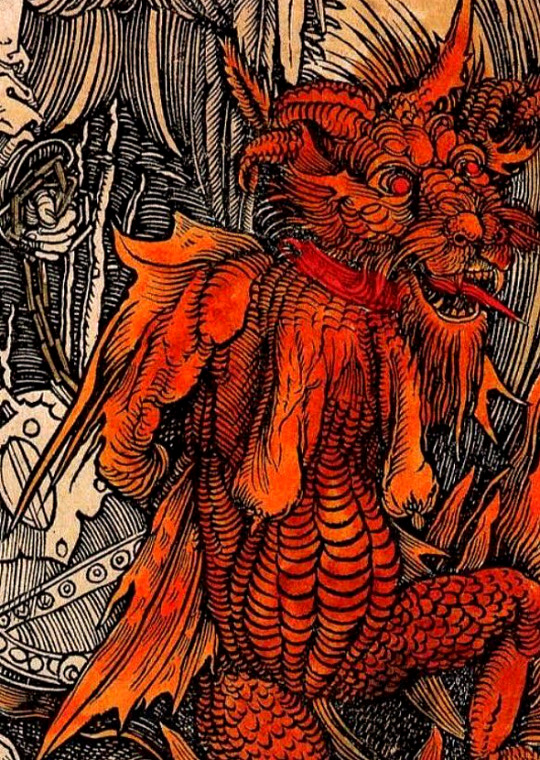
      2 Albrecht Dürer
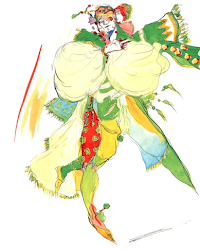
      3 Yoshitaka Amano
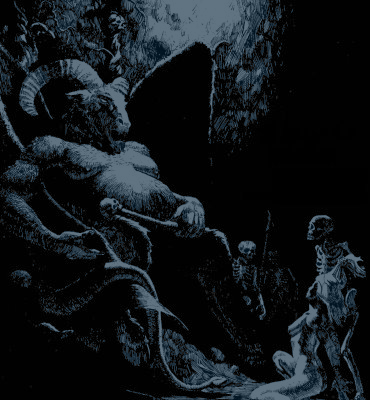
      4 Benny Marty
      5 Todd Lockwood
      6 Talon Abraxas
      7 KANEKO Tomiyuki

      Friday, May 31, 2024

      The Walled Gardens of Nisk

      I've been experimenting with writing city adventure locations with minimum-necessary detail for gameplay. The intention is to have the foundation of a place made and ready to go, so that when a "go to x location and accomplish y task" adventure is called for the x part is ready and accounted for above and beyond what is necessary for the y. 

      It's not too difficult to come up with a bespoke location for an adventure, but for a city game where players are more free to wander around wherever they want it's useful to have locations that can be run on their own without the players having a specific impetus to be there. The party might journey to the Place of Masks to steal a mcguffin but if they just stumble upon it I want there to be enough material for spontaneous adventure. And if down the line when the PCs need a disguise or something and one goes "what about that costumer we ran into in that mask place?" then everything worked as intended.

      All that's needed at the preliminary stage is a concept, an encounter table, factions, and a couple points of interest. My goal is to have the whole location fit on a two-page spread, maybe not including stat blocks if I'm being generous to myself. 

      The following example took me about two days to finish between work and other commitments to finish. If I start with ~10 and build more as necessary, the city would exist as a fully operational ecosystem of adventure locales that could be run indefinitely. Hopefully. This might become a monumental amount of work that I'll shamefully abandon but we'll see how it goes. 


      The Walled Gardens of Nisk

      Since before anyone can remember, the wondrous pleasure gardens of Nisk were tended to by the Greenskeeper clan, an insular group whose self-seclusion gave rise to all manner of strange customs and practices. At one time the gardens were the pride of the city, but since the coming of the Overlord few dare to walk its tangled paths. 

      Michael Hutter

      Encounters (d20)

      1-2 3d4 Greenskeeper clan soldiers led by a 3 HD captain [patrolling | hunting sectids | resting] 

      3-4 2d6 Greenskeeper clan botanists [planting, 25% are keeping watch | transporting valuable plants, soils, or seeds worth sp equal to 100x no. encountered; accompanied by 1 clan soldier for every 4 botanists | fighting a monster plant (8 HD)] 

      5 Greenskeeper clan hivemaster accompanied by 2d6 apiarists  

      6-7 1d4 Decorative fauna [grooming | feeding | slowly being consumed by a monster plant]

      8-9 Monster plant

      10-11 2d6 Sectid skirmishers [emerging from the ground | tearing down trees | consuming deceased sectids]

      12 1d100 Sectid scavengers [devouring plant matter | dehydrating flower plots | shedding old carapaces] 

      13-14 2d8 Touring nobles, accompanied by 2 guards per person. 

      15 Clan ceremony procession. 3d20 Greenskeepers in full regalia chanting, spreading seeds, and holding tall flowers like military standards.

      16-17 1d8 Thieves [stashing treasure | meeting a contact | getting loaded]

      18 Dryad, cut off from her world, filled with remarkable sorrow and loneliness. The melancholy beauty of the plants blooming around her would make anyone’s heart ache. 

      19-20 2d6 Plant poachers employed by an alchemist house [creeping around looking for vulnerable plants | harvesting, disguised as botanists | running from a squad clan soldiers]


      Set dressing/points of interest (d20)

      1 Observation tower with an immaculate view 

      2 Bridge over gentle stream 

      3 Overgrown pergola/pavilion/gazebo

      4 Sculpture park

      5 Topiary scene 

      6 Defaced nymphaeum

      7 Mossy fountain

      8 Stone amphitheater 

      9 Reflecting pool

      10 Rickety bandstand

      11 Menagerie prison, with 1d6 captives (50% agents of alchemist houses, 50% random plant poachers or interlopers) held in ornate verdigris-covered cages. The animals have been cleared out long ago. The Greenskeeper clan use the now use it to incarcerate captive poachers.

      12 Fish pond, stepping stone bridge

      13 Area razed by sectids. Desiccated ash fills the gaps in the cobblestone path. Rows of garden plots reduced to nothing but dust. Even the air feels dry. 

      14 Bell tower

      15 Telescope tower

      16 Lens tower. Giant magnifying glass on top floor focuses sunlight to create a devastating heat beam. One of many hidden defensive structures from a bygone era. Operation without a key requires a successful disarm trap roll. Once activated it operates for 2d6 rounds before shutting down. Targets save vs. death ray or take 2d20 damage, half on success. Each round the beam can either sweep in a 60' line or target a single individual, imposing -4 to their save. 

      17 Greenskeeper clan residential building. Short hexagonal tower overgrown with vines and ivy, meant to blend with the surrounding follies. Off limits to everyone, even nobility. Guarded by d6+6 soldiers at all times. 

      18 Apiary. Rare imported bees tended to by 1d12+2 clan beekeepers and 1 hivemaster at a given time. Four clan soldiers stand guard after sundown.  Rare honeys worth 2d10x10 sp can be extracted from the hives, but protective equipment is required. 

      19 Dueling grounds (40% chance it will be in use; two nobles dueling, their seconds, and a crowd of non-combatant spectators) 

      20 Greenhouse. Guarded by 1d6+1 soldiers and operated by three times as many horticulturalists. Among cultivating all manner of plants, greenhouses are where clan horticulturalists research and conduct radical plant experiments. 

          Plant types (d6)

          1 Valuable, 1d6x1000 sp.

          2 Reagents, 1d6x100 sp for spell research and potion-making costs. 

          3 Poison, 2d8 doses, save vs. death when imbibed. 50 sp per dose on the black market. 

          4 Monster plants, 1d6 4 HD of the same type. 

          5 Beautiful but extremely fragile, will shrivel immediately after leaving the greenhouse. 

          6 Extremely noxious, unless wearing face covering save vs. poison or pass out, -4 to everything on success.


      Sample NPCs

      1 Mila Stenot; clan horticulturist. Proud and passionate. Loves the gardens above everything else. The rest of the city could burn for all she cares. Distrustful of outsiders. 

      2 Abel Halict; clan botanist. Frequent jokes poorly mask his many anxieties. Sells plants on the black market (or to anyone else willing to buy) to pay off his immense gambling debts. 

      3 Diedrik Andren; commander of the clan soldiers. Sharp but getting up there in the years. Convinced the alchemist houses are behind the sectid infestation and it’s driving him mad. 

      4 Nora Collet; hivemaster of Apiary IX. Hyper-rational scientist-type. Secretly keeps a brood of sectid hatchlings in an abandoned shed to study their habits. She won’t admit she’s growing too attached. 

      5 Dominicus Glyth; nobleman and garden enthusiast. Tranquil but a little spacey. Spends more time in the gardens than anyone else outside the clan, and knows more than he lets on about what goes on there. 

      6 Faine Hisembol; alchemist house aspirant. Young, headstrong, takes himself too seriously. Poaches plants in the hopes of getting accepted in an alchemist houses.


      Quick stats

      Greenskeeper clan botanist/horticulturalist/apiarist 

      Smart cloaks, utility coveralls, badges denoting rank and station

      HD 1 AC 7 Att. dagger 1d4 (horticulturist+apiarist) or short sword 1d6 (botanist) Mv. 120'(40') Ml. 7

          Botanists and horticulturists have whistles that will hail 2d6 soldiers in 1d6 rounds. 

          Apiarists each have a jar of bees they can throw for self-defense. 


      Greenskeeper clan soldier

      Grass-stained uniforms, cumbersome sallets

      HD 1+1 AC 5 Att. polearm 1d10 Mv. 90'(30') Ml 9


      Greenskeeper clan hivemaster

      Wicker bee-mask, bulky protective gear, constant sound of buzzing

      HD 3 AC 5 Att. battle axe 1d8 Mv. 90'(30') Ml 9

          Always encountered with 2 swarms of bees under their control.


      Sectid skirmisher

      Chittering kobold-like locusts. Origins are a mystery.

      HD 1/2 AC 7 Att. claw 1d6 Mv. 120'(40') Ml 7


      Sectid scavenger 

      Smaller kobold-like locusts. Origins are a mystery.

      HD 0 (1 hp) AC 7 Att. slam 1 dmg Mv. 150' (50') Ml 7


      Decorative fauna 

      Beautiful flightless birds and ruminant mammals, bred or imported, decorate the gardens and feed carnivorous plants. The remains of such creatures are valuable—worth 100 sp to a dressmaker, taxidermist, etc. 

      HD 2 AC 9 Mv. 120' (40') noncombatant, will run away if attacked


      Thieves and poachers

      As bandits


      Nobles, dryads, bee swarms, etc.

      As per system


      Monster plants

      Swollen shoots, Dagger-like thorns, immoderate blooms in garish colors.

      HD 1d6+2 AC 1d4+2 Att. Thrashing Vines x4 (variable, 20’ range)+see below Mv. 0’ 

      Vine attack type (1d8)

      1-2 Razor sharp. 1d10 damage

      3-4 Constricting. 1d6, repeated each round + target immobilized unless vines are hacked away with a slashing weapon

      5-6 Whipping tendrils. 1d8, 6 attacks per round

      7 Bloodsucking. 1d4, repeated each round until vines are torn off, plant heals 1 hp each time vines deal damage

      8 No vines but instead thick burled branches. 2d6, 3 attacks per round

      Additional features (1d8)

      1 Regenerating. 1d4 hp/round

      2 Parasitized. 1d4 parasites emerge when killed, stats as giant centipedes 

      3 Ambulatory. Move speed 20’

      4 Thorn tangle. 20’ radius around plant, starting your round in the radius causes a save vs. paralysis or become immobilized; spend your attack and take 1d4 damage to break free. Radius increases 10’ every round in combat

      5 Chemical release. Triggers every 3 rounds; everyone in a 60’ radius saves vs. poison or becomes confused for 2d6 rounds 

      6 Snapping maw. Additional attack, 2d8, exceeding AC by 5+ means target is swallowed. Digesting enzymes deal 1d4 damage/round; creature breaks free if at least 6 slashing damage is dealt to the plant in a round

      7 Thick mucilage. Save vs. paralysis on hitting or being hit by the plant in melee or be covered in glue; half movement and -2 to attacks until cleaned off.

      8 Swarm attractor. When reduced to half hp, the plant releases compounds that attract 1d4+1 swarms of bees to harry attackers. 

      Sunday, March 31, 2024

      This is level 1

      People have some differing thoughts on what exactly 1st level PCs are in the game world and what distinguishes them from an average person. However helpful they may seem, level titles are big source of the confusion. Here is how I interpret 1st level PCs in the games I run.

      Fighters

      What differentiates 1st level fighters from your typical 0 level man-at-arms is that fighters survived a conflict where others like them perished. Could be anything from fighting in a war to fending off a pack of wolves. What's important is that fighters went through the crucible of lethal combat and emerged more alive than before. First level fighters are called VETERANS. 

      Magic-users

      Beginning magic-users have studied in the ways of the sorcerers of ancient Zenon, where it is said all secrets of magic were known. Through rigorous cultivation, a magic-user's mind is prepared to serve as an intermediary between this world and the unseen realms from which magic is derived. First level magic-users are known as MEDIUMS.

      Thieves

      Anyone can slink in the dark and steal an exposed coin purse but a real thief is something more. To move in true silence, vanish in shadows, scale sheer surfaces without aid, intuit the precise workings of a complex mechanism and the vulnerabilities of an unsuspecting target—all are feats that exceed the capability of mundane folk. But it's hard to learn these things on your own, so it is assumed thieves start as inductees in the mysterious thieves guild or some other branch of the organized crime network. First level thieves are APPRENTICES. 

      Clerics

      Clerics are closely tied to their alignment. Beyond conventional worshipers, clerics are the earthly champions of Law and Chaos, and are granted numinous powers for their devotion. While some clerics may follow a specific patron deity, all clerics of the same alignment are more or less part of the same faith. Newly initiated clerics must still prove their worth, and so are relegated to executing their function without the use of spells. First level clerics are called ACOLYTES. 


      Thursday, December 7, 2023

      Chaos are the bad guys

      "A legion of horribles, hundreds in number, half naked or clad in costumes attic or biblical or wardrobed out of a fevered dream with the skins of animals and silk finery and pieces of uniform still tracked with the blood of prior owners... many with their braids spliced up with the hair of other beasts until they trailed upon the ground and their horses' ears and tails worked with bits of brightly colored cloth and one whose horse's whole head was painted crimson red and all the horsemen's faces gaudy and grotesque with daubings like a company of mounted clowns, death hilarious, all howling in a barbarous tongue and riding down upon them like a horde from a hell more horrible yet than the brimstone land of Christian reckoning, screeching and yammering and clothed in smoke like those vaporous beings in regions beyond right knowing where the eye wanders and the lip jerks and drools.” Cormac McCarthy, Blood Meridian

      “'Those two worlds — and many more for all I know — are in some way the same. The same fight was being waged, here the Nazis and there the Middle World; but in both places, Chaos against Law, something old and wild and blind at war with man and the works of man. In both worlds it was the time of need for Denmark and France.'” Poul Anderson, Three Hearts and Three Lions


      “Brigands are loosely organized outlaws and renegade mercenaries who live by raiding towns and robbing caravans and travelers.” Gary Gygax and Dave Arneson, Dungeons & Dragons Fantasy Adventure Game Expert Rulebook


      A big reason why some elfgamers reject alignment is that they feel it's limiting. I disagree. Alignment can be a generative force in a campaign, because at its core it's about conflict. 


      Frankly, D&D shat the bed on alignment when good and evil were added, and shat it again when articulating alignment as personal morals instead of distinct factions, or whatever was going on in OD&D. A lot of people recognize instinctively that these are overly simplistic ways to frame personal ethics (and if you don't, here is a solid summary), but alas we persist in the shadow of this twice-shat bed. With that being said, I'm going to be a shooter for Gygax et. al for a second and explain why the classic perspective of alignment-as-ideology is actually (kinda) an effective formulation of the central tension of D&D's implied setting, working backwards from the assumptions the game gives us. 

      There's a lot of talk about what's "implied" about the world in old school D&D editions but tiptoeing dancer-like around the discussion of to what extent D&D can be perceived as colonialist fantasy etc. predicated on assumptions of untamed wilderness and savage others etc. and to what extent this is problematic etc. the most compelling interpretation of D&D's implied setting (meaning what is communicated through the descriptions of monsters, wilderness, and so on) is not some new-world myth of untrammeled wilderness, as many presume, but rather a post-collapse dark age—hence all the dungeons and bizarre magic and treasure for us to find. The dangers that lurk outside of the little bastions of civilization are a direct result of overlapping cultural, economic, and infrastructural breakdowns of a past supercivilization.

      Some historians say the fall of the Roman Empire was such a catastrophe that archaeological evidence suggests people in Britain lost the ability to make wheel-thrown pottery. The scale of catastrophe would be indistinguishable from a slow apocalypse to the people living through it. Total bummer when it happens in real life, but ripe territory for D&D: imagine a Mad-Max-style landscape of lawless territories and hard-bitten settlements, with roving warbands of ruthless warriors bearing a motley patchwork of armor and weaponry salvaged from a lost civilization. But in a fantasy setting: less football pads and flamethrowers and more gothic plate mail and halberds (and also maybe flamethrowers).

      Where does alignment come in? It's deciding what to do now that the old world has ended. Law and Chaos are not (solely) found in the quasi-religious spiritualism of Moorcock's or Warhammer's cosmic conflict, but in the choices people are confronted with when humanity is driven to the edge. Does one try to preserve what is left and rebuild amongst the ruins, or do take what they can and burn the rest? Both endeavors have their appeal, and more importantly, both have their place within a campaign world. But when perceived through the framework the game offers us, chaos is the anti-human impulse. 

      When the brigands take up arms and raid the village, they are not doing so out of any specific malice to the townsfolk but rather pure self-interest and a straightforward disregard for the wellbeing of those they deem lesser. Chaos is the rule of might making right, it's the sentiment that the world can burn as long as I get mine. When you understand chaos through such a lens it makes a lot more sense why Poul Anderson identified fascism as an ideology at odds with the works of mankind in Three Hearts and Three Lions, the book that gave alignment to D&D. In terms of societal structure, alignment can be looked at as the difference between relational and coercive hierarchy. Lawful societies may be strict and repressive, but chaotic societies are ruled purely through the use of force and subjugation. Skulls for the skull throne. 

      I am sympathetic to attempts at rehabilitating chaos. The instinct to invert the conventional morality of law and chaos is an understandable one, especially considering how many real-world institutions of authority benefit a privileged few at the expense of everyone else. But while this approach offers a compelling alternate perspective on chaos as a defiant and liberatory counterpoint to law's oppressive authoritarianism, it relegates chaos to that of a response to a status quo; any competing viewpoint is secondary to resistance against the current thing. Instead, I feel that alignment offers more when law and chaos represent their own sets of opposing principles that are in dynamic competition with one another. Of course, this ultimately comes down to personal preference and what kind of narrative you want to engage with.

      In this way, the lens of alignment-as-ideology can also be applied to orcs and the age-old issue of "evil" races. Forget about trying to untangle the fraught presumption of monstrous humanoids being objectively evil—they are just in competition with everyone else. And they're doing well enough to pose an existential threat to humanity. Our peak has come and gone. Now it's their turn. Gothmog put it best: "The Age of Men is over. The Time of the Orc has come."