Wednesday, July 29, 2020

The Brollothere


The most noble steed, the greatest mount, the subject of countless legends and stories, is a creature known as the Brollothere. 

The Brollothere has the legs of a camel, the body of a horse, and the tail of an ox. Its face is long and pointed, somewhere between an okapi and a borzoi. It has loose, ivory fur and its eyes are pearly white without pupil or iris. Two golden ram horns arch around its head, which gave it its nickname “king goat.” It's a bit bigger than a clydesdale.


Its eyes make it seem as though it is unaware of its surroundings, but there's more than enough anecdotal evidence to suggest otherwise. Some have speculated that it has a supernatural sense of smell, while others posit it is mildly clairvoyant. 

The Brollothere is suited to any environment. It can climb and swim with ease and can gallop over nearly any terrain no matter how difficult. It can change it’s gait from that of a dromedary to that of a horse to best suit whatever land it traverses. Each of its legs has an additional joint right above the knee that can bend in the opposite direction, allowing for more mobility without compromising on strength. It’s faster than a race horse, tougher than a war horse, and never seems to tire (although it doesn’t like traveling at night). 


It’s possible that there is more than one Brollothere, since it has shown up in stories from all ages and cultures, but it’s generally considered to be wholly unique. After all, its commonly recognized as one of the blessed children of the Six-Eyed Unicorn, who birthed nine holy beasts to roam the world as it slowly dies in the Lake of Essence. 

Despite it’s legendary stature, the Brollothere is actually rather undiscerning when it comes to letting people ride as long as they abide by som rather stern guidelines.

  1. The rider must be of lawful or neutral alignment. The Brollothere is willing to make exceptions for those chaotically aligned, as long as their intentions are virtuous and they show adequate respect to the beast.
  2. The rider must not mount any other steed as long as they are companion to the Brollothere. The Brollothere is said to shun anyone who has chosen another mount after having ridden it, but it’s possible it can be won back over with adequate gifts and concessions.
  3. The Brollothere will not tolerate being used as a beast of burden. It is a mount worthy of a king, and will not take kindly to anyone treating it like a lowly mule or ass.
  4. The Brollothere has a strong aversion to subterranean spaces and will absolutely refuse to enter any dungeon (though due to its size it wouldn’t be able to fit in most anyway). Leaving the Brollothere on it’s own isn’t much of an issue, since it can look after itself perfectly fine. No predator ever dares attack it.
  5. The Brollothere will not attack another creature. In combat, the most it would do is shove or buck, even if its life or the life of its rider is in direct danger.


The Brollothere can survive on remarkably little food and water, but it has a special fondness for fruit—especially the golden figs that grow in the verdant oases of Harvoul. Bring it one of those and it will surely take a liking to you. 

In the most dire of circumstances, the Brollothere would let you sup from one of its six teats, from which pours a rich, golden milk. One mouthful restores 1d6+1 hp and is enough to sustain a grown adult through a whole day. The milk is discussed in gourmet societies with a reverence reserved only for the most legendary victuals. Many a charlatan has tried to peddle knockoffs as the real thing. 

Where to spot the Brollothere:
  1. Drinking from a sacred stream in a sacred grove atop a sacred mountain.
  2. Rescuing a group of orphans who are about to drown in a river.
  3. In the planar menagerie of a high-powered wizard.
  4. Ridden on by a purehearted king who’s going into battle against the villainous invaders laying siege to his small kingdom.
  5. Wandering alone among the golden sands of the endless desert. Or perhaps it’s merely a mirage?
  6. Leading a caravan of dwarves in search of a new home through an icy tundra.
  7. Off in the distance, in a dewy forest, at daybreak, silhouetted by the morning sun.
  8. Following around a motley crew of rapscallions and vagabonds who just can’t seem to get rid of it.
  9. Leaping from peak to peak with a pack of cloud goats in a misty mountain range.
  10. On sale at Farmer Lunn’s ranch. Going rate is 10,000 GP, but he’s willing to negotiate.

The Brollothere
8 HD, AC 7 [12 ascending], Attacks: shove. On a successful hit the target is knocked back up to 10’ and must save vs. paralysis or fall prone. Movement: 360’ (1.5x a standard riding horse). 

It can carry two full-grown adults in armor and gear with ease. A third would slow it down to 180’, and not much more could fit on it other than a child or halfling (whose weight would be negligible).

Monday, July 20, 2020

How to Make Rumor Tables If You're a Dummy or Really, Really Smart

ReFiend

So you've seen people talk about rumor tables or maybe read a few in published adventures. They're pretty cool and it's generally understood that they enhance your game (especially if you're running a sandbox), but there seems to be a startling dearth of material on using them. Here is a dirt-simple way to understand rumor tables and make them for your game.

When creating a rumor table, make at least one rumor on...
  1. A prominent NPC
  2. A random encounter (insight on something they might run into in the wilderness)
  3. A local spot of interest
  4. Town politics/drama 
  5. Specific lore about the dungeon or area of interest
  6. Recent event or happening 
  7. An object or artifact of value (or just a treasure horde, w/e) in the vicinity that the players would be interested in
  8. A semi-falsehood about (roll again)
  9. A semi-falsehood about (roll again)
  10. A falsehood about (roll again)
Complete this table, swap out the options with your own ideas to fit your campaign, and make falsehoods more or less prevalent according to your taste. Also randomize the results whenever you do this so that the players don't realize that getting an 8-10 on their rumor roll means that they're about to be fed some bullshit. 

Do this for every settlement your players can feasibly reach to have a d10 (or higher) rumor table ready to go the moment they step foot in town. Each category could have multiple installments, which means you can cram them all in one massive table or have nested tables like the random encounters in B/X.

artcobain

This isn't strictly a top-down or bottom-up approach to preparation; it can be either depending on your preference. I prefer to have the basics of the location down before grinding out digestible rumor-sized info packets, but I can imagine it's pretty easy to use this to generate some rumor tidbits first and build out from there. 

Here's an example from a table I recently made for my campaign when the players made a delivery to some NPCs in a town called Dim Hill: 
  1. Lady Theophania von Noctum is known for delighting in odd and off-putting pastimes. She has recently developed an addiction to dreamstone dust.
  2. The people vultures might seem fearsome, but they'll leave you alone as long as you show you're not a threat.
  3. There's talk of a dreamstone den hidden away somewhere in the catacombs below the graveyard fields. It's an open secret that it exists, but actually finding it is a challenge—you probably need a map or a guide.
  4. Roving bands of unruly adolescents have started putting pumpkins on their head and terrorizing the town. They're led by someone they call King Jack.
  5. The Noctum is a region of the Cerulean Valley where spirits of the dead have never quite found rest. The air itself is so suffused with the ethereal ectoplasm built up over the countless ages that you can even see it hanging wisp-like in the air if the light is right. Theophania has ruled the Noctum since before anyone can remember
  6. Dread Ulfire has hired the Barb-Hide Boys to extort the people traveling on the road to Eagle's Reach. They're charging money for "protection" and mugging anyone who refuses to pay. 
  7. No one's been inside the Vinsler mansion since the family disappeared a decade ago. Supposedly, they left behind all the curios in their gallery and whatever other valuables they had.
  8. Lady Theophania and Dread Ulfire have a history. The two of them go way back.
  9. The Vinsler's didn't disappear, they were just cursed to be mute and invisible. 
  10. A cursed ring was dropped down the old well at the center of town, which is how the water got poisoned. 
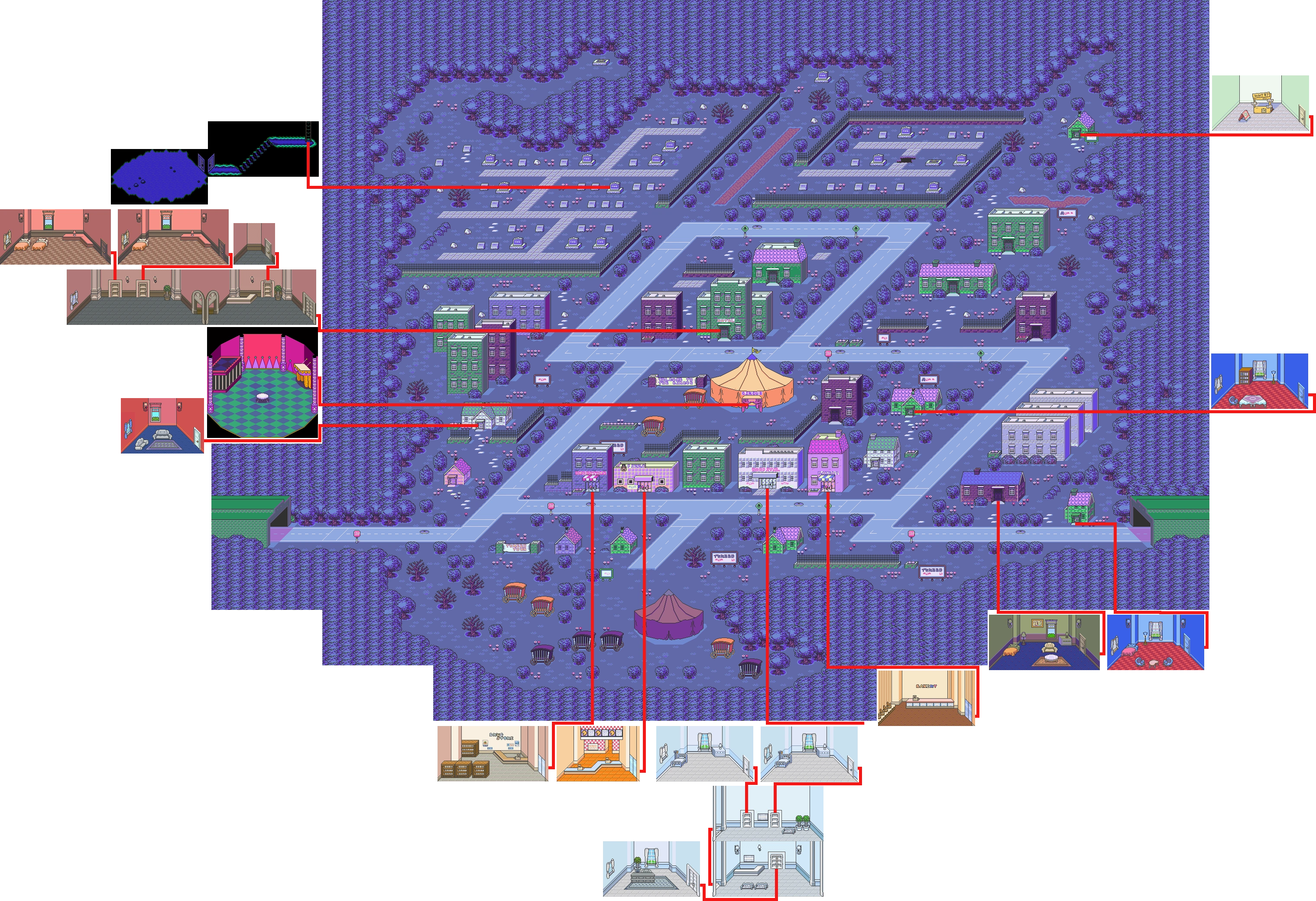
Dim Hill is kind of like Threed from Earthbound 

TAKING IT A STEP FURTHER
Rumors can be broken up into three types: Direct, Indirect, and Parallel.

Direct rumors are explicitly related to goals or things the PCs might be interested in, and they are usually immediately actionable. They are bits of information from which the PCs can actively base their next course of action on. Are multitudes of children disappearing down the old well that may or may not be a portal to the terrible dungeon dimension? A rumor describing that would be Direct. 

Indirect rumors are more intended to set the tone or provide more lore and context. They're not necessarily bits of information that PCs can use as soon as they hear them, but instead they can provide more general information and set the expectations for the sort of people and things the players can encounter in the area. If all the nobles in this city are addicted to a very specific and very illegal type of drug, the rumor that would fill the PCs in on that would be an Indirect one. 

Parallel rumors are rumors that might be actionable, but aren't strictly tied to things the PCs might be interested in accomplishing at the moment. Perhaps these could be alternative adventure hooks for the PCs if things are starting to get stale, or they might be hints at things to come. Interestingly, Parallel rumors can also act as tone-setting details in the same way that Indirect rumors are. That makes them a sort of synthesis between the two. A parallel rumor could be something like "there's a farm at the edge of town where all the animals have 12 legs." Weird, but not something the PCs immediately want or need to concern themselves with.

Jungpark

Going back to our original example, here's how each rumor breaks down:
  1. Lady Theophania von Noctum is known for delighting in odd and off-putting pastimes. She has recently developed an addiction to dreamstone dust. Parallel
  2. The people vultures might seem fearsome, but they'll leave you alone as long as you show you're not a threat. Indirect
  3. There's talk of a dreamstone den hidden away somewhere in the catacombs below the graveyard fields. It's an open secret that it exists, but actually finding it is a challenge—you probably need a map or a guide. Direct
  4. Roving bands of unruly adolescents have started wearing pumpkins on their heads and terrorizing the town. They're led by someone they call King Jack. Direct
  5. The Noctum is a region of the Cerulean Valley where spirits of the dead have never quite found rest. The air itself is so suffused with the ethereal ectoplasm built up over the countless ages that you can even see it hanging wisp-like in the air if the light is right. Theophania has ruled the Noctum since before anyone can remember. Indirect
  6. Dread Ulfire has hired the Barb-Hide Boys to extort the people traveling on the road to Eagle's Reach. They're charging money for "protection" and mugging anyone who refuses to pay. Parallel
  7. No one's been inside the Vinsler mansion since the family disappeared a decade ago. Supposedly, they left behind all the curios in their gallery and whatever other valuables they had. Direct
  8. Lady Theophania and Dread Ulfire have a history. The two of them go way back. Indirect
  9.  The Vinsler's didn't disappear, they were just cursed to be mute and invisible. Parallel
  10. A cursed ring was dropped down the old well at the center of town, which is how the water got poisoned. Parallel
These categories aren't strict, I just find that keeping them in mind helps my rumors stay fresh so that they're not all the same "weight," because otherwise your town would be a kind of WoW-style quest hub like what you find in 5e modules and that's just boring. 

JanBoruta

You might think you'd need to do the typical D&D thing where you ensure that you always have specific ratios of each type of rumor and that each rumor needs to be strictly categorized into one of the three categories, but I actually advise against that. 

The point of rumors is merely to convey information to the players and keep the game moving. It's good to keep in mind that different rumors can accomplish different things and make sure you have a good proportion of each type, but you don't really need to sweat it. As with everything, experiment with different types of rumors and see what works. 

INFORMATION, MISINFORMATION, DISINFORMATION
False rumors, like mimics and cursed magic items, should be employed in moderation. You ought to include them to keep the players on their toes and make them think critically about their knowledge, but throw in too many and they simply will stop trusting them. Many a young DM soon learns that if 50% of the NPCs they introduce stab the party in the back, the party will become skeptical of 100% of the NPCs they encounter—and that just slows the game down. 

So instead of just having rumors that are either correct or flat-out lies, consider blurring the lines a bit. A "false" rumor could be an exaggeration of the truth, or perhaps a misremembering of certain details. On the flip side, rumors could be flat-out false but still be informative. No, there aren't bandits hiding around the bend in the road waiting to mug travelers, now stop asking. Yes, Sir Dane slew the forest troll months ago with his flaming sword, any suggestion it might still be lurking there is preposterous. 

MichaelBrack

But don't be afraid to give false AND misleading rumors, too. You shouldn't prank your players, but feeding them misinfo could be an interesting spice to add in any scenario. Maybe they show up to the river witch's lair in full scuba gear, only to find that the stream dried up weeks ago. Now they have to decide if they want to explore it in wetsuits or just call it quits and make the long trek back to town. Or maybe seek out some other aquatic adventure since they're already prepared for one. 

Remember that A) the game does not need to be balanced in favor of the players, and B) rewards are won by taking risks, and lives are saved by being careful. 

Czepeku

BUT WAIT, HOW DO I ACTUALLY GIVE RUMORS?
Whether you want to just tell the players some info or roleplay a whole conversation comes down to personal preference, as either method accomplishes different things. If you want to focus more on the adventures and care less about what happens in between, there's nothing wrong with just giving players a few sentences of exposition whenever they roll for rumors. 

Alternatively, if you feel as though the social/factional/RP elements of your game ought to take precedence, playing out a conversation where the content of the rumor is embedded in the responses of the NPC can add some more dimensions of complexity to the information transferring process. It allows the players to ask questions and dig deeper on things they find interesting, while also letting the DM tailor to information they provide to match who it is the players are talking to. If one character goes to the town crier for rumors and the other pays a visit to the shifty fellow hiding out in an alley, the two will probably have different attitudes and opinions toward whatever rumor-worthy happenings they tell the characters about. 

DominikMayer

The downside of RPing rumors is, of course, that it takes more time and engagement from the players. You only have so many hours in a session, so think about how much of that time you're willing to spend on having the players grill nameless NPCs. 

A NOTE ON DIEGETIC RUMORS:
I see in blog posts and modules all the time rumors written out as though they were being spoken by the person giving the rumor. This isn't a bad practice per se but in my experience on both the player and DM side of things these types of rumors lead to the same bland tablesitting as excessive read-aloud text. Here's a dramatized example:

DM: Alright so since you all want to look for rumors everyone roll a d10. Zargamax, you go first. What did you get?
Zargamax: A 6!
DM: Ok sounds good, one sec. Ahem; you see a worried-looking woman walking down the side of the road opposite you. She yells *funny voice* "The quartz-toothed morlocks are devouring our precious children! Gods above, won't someone please storm their crystalline cavern and free us from this wretchéd fate?" 
Zargamax: Hmm ok cool
DM: Thendrilon you're next. What did you get?
Thendrilon: A 4!
DM: Alright. You see, uh, a one-eyed man seated at a table outside of the bar loudly conversing with his nondescript companion. He says *same funny voice but deeper* "Well I'll be, the dirt harvest sure was fruitful this year. Ain't it a shame that we have to give most o' our crop to that sable dandy the Black Knight next time he raids our humble village?" 
Thendrilon: Oh nice ok
DM: Alright, um, Girgamesh you're next
Girgamesh, who up until now was looking slack-jawed at the table: Oh uhh I forgot my roll hang on let me do it again

AND SO ON. 

Obviously this is an exaggeration (I guess) (for the most part) but the real thing I'm getting at is that rumors should be more freeform and abstract than what a lot of written modules, etc. make them out to be. I'm sure no designer would encourage you to just read out the rumor as our DM did in the example, but the point is that's the sort of gameplay that th sort of game design leads to. Just be as smart about it as you would any read-aloud text. 


Images from Deviantart

Thursday, July 9, 2020

Why I Am Right About Skeletons and How You Can Be Too

So a little while ago Patrick Stuart (who my one irl friend familiar with OSR blogs once called "the most handsome blogger") made a post on Twitter asking for people's opinions on the 10 monsters most "emblematic of 'classic' D&D." I skimmed a few lists that people posted and found what I considered to be a critical error in the opinions of some of PatStu's other followers. With the gusto of a disaffected D&D nerd trying to sneak some Twitter-time at work, I leapt into action and typed out a fiery diatribe. My cutting proclamation is as follows:

"Any list that ignores skeletons is sorely lacking. The skeleton is the purest embodiment of the 'other,' the dark mirror of humanity that depicts our fear of our mortality and the perversion of life—the perfect analog to the over world/mythic underworld dichotomy of classic d&d"

Needless to say I have thought about this before. Jokes and zeal aside, I stand by my statement; skeletons are as pure an old-school D&D monster as one could get. AND HERE IS WHY:
cool_skeleton_ironic.jpg
To me, the core appeal of classic D&D is that the game is a prime format for encountering the "Other." The basic assumption of classic D&D is that there are weird and terrible things out there, and you get to go find them. This happens mostly in the dungeon, but also sometimes in the wilderness. This isn't just reflected in the assuméd aesthetíc of classic D&D, but also the very rules themselves.

When it comes to mechanics, the rules that distinguish classic D&D from the new school cover pretty basic stuff. Rules for resource management, time keeping, encumbrance, exploration, light, etc. are all heavily emphasized in early editions while largely handwaved or easily circumvented in newer ones.

Older systems go through great pains to make rules for mundane things. This might seem like a pain in the ass to the unitiated, but the result means that players have to put themselves in the headspace of someone actually going down into a dungeon—what must one be concerned with when spelunking in actively hostile circumstances.
From Dungeon Crawl Classics. This belongs in a museum if you ask me

And so with all these mundane things weighing on the minds of the players—can they see, have they eaten, boy this backpack is heavy—when they encounter something that breaks these rules, something that can see in the dark, pass through jammed doors, and survive and thrive in the underworld, it makes it all the more Weird.

But surely there are Weirder monsters than the humble skeleton, right? Every gradeschooler is well familiar with the bony fellows that come out every Halloween and whenever Teacher gets around to discussing the human body. After all, D&D is the game that gave us such wonky wonders as the owlbear and mind flayer. But while the zany critters that sprung forth Athena-like from Gygax's brain might be strange and novel, they don't approach the level of deep-seated human revulsion that skeletons can invoke.

I pretty much explain this as well as I feel like I can in the original tweet, but allow me to expand. Skeletons have long been used as a sinister negative to humans. They represent death but are necessary for life; they are both grotesquely unnatural yet essential to ourselves. They're quintessential spooky. So they are perfect mirrors to the way classic D&D draws us in and fucks with us.
See? It's holding a mirror! You get it, right?

While dungeons are simultaneously a) tangible spaces that players must navigate within the limits of their character's physical capabilities and b) the mythic underworld home to many strange and idiosyncratic creatures+features, skeletons (the undead kind) are both a) distinctly human in origin and b) utterly unnatural.

If you were some 13th century farmer checking out the mysterious cave and came across a rust monster you might think "wöwe, that ys oon funnie lookyng dög." But if it's a wandering skeleton you came across that may or may not be keen on killing you it might be more like seeing your dad with a third eyeball where his nose used to be.
From Army of Darkness
It's unfortunate but understandable that most people just file skeletons away as low-tier undead mooks. When you're sitting around the table with your friends and find 2d6 skeletons in the next room, you're probably not going to reflect on Bruegel and Memento Mori symbology. But every once in a while it's important (or maybe just a fun exercise) to remember what it is we're all trying to do with old-school D&D, and why it has that strange captivating magic that more contemporary games seem to lack.

Perhaps the modern TTRPG gamer is too desensitized these days to appreciate the humble skeleton. How can one still be shocked by a grinning reminder of their own mortality after they have already confronted the vile monstrosities and mind-breaking horrors that are now ever-present in contemporary fantasy media?
From Jason and the Argonauts. I remember watching this as a young kid coming up in the era of crappy CG and just being amazed at how the skeletons looked and moved—they were so different than everything I'd seen before. 

Do players need to be scared of skeletons? The answer is no, but I still think they ought to be. And if not the players than at least the characters. And we need to do this without making them a total pain in the ass, because annoyance beats out fear 100% of the time once players get used to the gimmick.

You could always introduce variant types of skeletons to keep them fresh. They might not be "scary," but it can still be fun to introduce a fresh spin on a classic monster.

Or you can add more stuff to the basic skeleton. Not so much that they just become "skeletons, but more difficult," but just enough to really convey through the means of the game just how horrible the grinning bastards are. After all, like most classic monsters, its not the skeletons themselves that are scary but what they represent. 
Pieter Bruegel - The Triumph of Death. Here, skeletons represent the plague, which is very relevant and topical right now.

Skeletons shouldn't be too smart, but they should have a sort of herd intelligence. The more of them there are, the quicker they can learn, evaluate circumstances, and adapt accordingly. Just like how a trail of ants might adjust their route to account for new obstacles put in their way, a line of skeletons marching through a dungeon corridor can adapt to circumstances as they develop—the first few might walk directly through the puddle of burning oil, but the rest would walk around it.

One skeleton might be easy to outsmart, but many skeletons are a different matter. If you're hiding from them in a tree they can't climb, they might spend a few minutes foolishly failing to hoist themselves up the branches, but in a few turns they'll learn to use their bodies as ladders on which their comrades can climb.

Skeletons should be able to sense living creatures without needing to see or hear them. They might not be able to pinpoint your exact location, but they can sense your presence and know when they're getting closer or further away. The more skeletons there are, the easier it is for them to find you.
Shigeru Mizuki
Here are a list of minor features for skeletons:
  • Horrify: Bearing witness to such a perversion of mortality can shake one's foundational understanding of life and death. Upon first encountering them, all animals and 0 level noncombatants must make a morale check or run away in fear. 
  • Blighting Aspect: The vile nature of unlife extends beyond the skeleton itself and inhabits the very space it occupies. Standard rations have a 20% chance of going rancid after coming in proximity of a skeleton. If you have a lot of rations or don't feel like rolling, then assume that 20% of the total quantity of rations have gone bad.
  • Life Negation: Being near a skeleton is physically, psychologically, and spiritually draining. After encountering skeletons, everyone saves vs. paralysis. If you fail, you only regain half the HP you normally would the next time you recover hit points (magically or naturally). Additionally, you cannot naturally regain HP while in the presence of a skeleton. 
The goal here is to give skeletons mechanics that communicate just how fucking awful they are without cranking up their threat level too much. You can do this with all undead, but I like the idea of just reserving these for skeletons since their the undead most morphologically different than humans. Vampires, revenants, and even zombies are still recognizably people (for the most part), but strip a body of its flesh and it becomes something else.  

Sunday, June 28, 2020

Last Planet Campaign Primer


Time, once thought ineffable, is hurtling toward an end. A massive, sentient, hyper-intelligent black hole known as Ultima Zero has opened at the center of the universe and is slowly consuming our reality. Inevitably, all we know will meet its singularity.

The world we find ourselves in is old, like everything else. It has gone through more names, more suns, more eras and epochs and eons than anyone cares to count. The face of the planet has reshaped more than the surface of an ocean during a raging storm. The gods have all died ages ago. Utopias, apocalypses, and everything in between have come and gone.

One could say the current era, which very well may be the last, is a dark age. But the ghosts of the old world are restless, and the terrible artifacts of the past have a way of being found again. People stay tightly clustered in their towns and cities for fear of the unknowable wilderness beyond.

No one knows exactly when things fell apart, except that it was somewhere in the misty haze of the "long ago" when Ultima Zero was born. The legend goes that the nations of the world united to form the Eternal League, a coalition devoted to countering the insurmountable threat of Ultima Zero. Yet something went wrong, and the League fell to internal conflict (or perhaps something else). The nations of the world descended into chaos.

When the turmoil reached its peak, one of the remaining countries left the planet. Stories differ on the details but it is understood that the people of the nation of Valia, one of the founders of the Eternal League, seceded from the planet and went off beyond the sky.

No one knows what means the Valians used to leave the planet, yet from the dregs of history depictions have been recovered showing Valians climbing onto the backs of giants that leap out into space. No other evidence has been found to further elucidate the mystery, and many believe the story to be only a myth. Still, though, some swear to have found remnants of these giants buried in the dark recesses of forsaken land.

It is now indeterminate millennia later. Those who seek it understand that power can be found through covenant with the detritus of the restless past. Others look toward the lore of the ancients, for so many minds have come and gone from this world that one could only imagine what great secrets lie forgotten. And some merely strive to make sense of the world through study and contemplation amidst the calamity Ultima Zero has wrought upon space and time.

Society is reforming, and new nations are just starting to emerge. The greatest of which was the city-state of Zenonia. The megalopolis was built around several ancient megastructures and securely located on the coast of the inhospitable Black Desert, accessible only by sea or sky. But today it has been destroyed.

Three giant air-fairing vessels in the form of massive whirling heads appeared above Zenonia. No one alive saw how they approached. From the totems' mouths spewed countless insectile creatures that laid waste to the city, dropping bombs the size of boulders that explode in flashes of light and heat so great everything in their radius gets instantly vaporized. Zenonia was painstakingly constructed over the course of centuries, only to be returned to the ashes upon which it was built in a matter of hours.

Few survived, and even fewer who surveyed the attack knew what it meant: the Valians have returned. And they seek to resurrect the Eternal League by whatever means necessary.


***

This is a primer on the campaign I am currently running. If you're at all familiar with the influences then they are probably obvious to you. I'm borrowing liberally from the Dying Earth, Gundam, Moebius' Edena saga, and a bunch of other things that would typically be considered "science fantasy" or "gonzo." 

The first session was the destruction of Zenonia. I had set it up to be a pretty tight flowchart-style succession of scenarios and by the end of it the players had escaped by airship and but were stranded on the Cerulean Valley, where I intended for the first part of the campaign to take place. We're only a couple sessions in so far but the players have already decided they want to set up a trading/delivery/smuggling operation and find their coin by moving goods. 

This seems like a fun idea, even if it was not what I was expecting when I was putting the campaign together. I had so far only skimmed Luka Rejec's Ultraviolet Grasslands since it seems like it was influenced by the sort of stuff I was taking inspiration from but now I better read it again to harvest more material from it to graft unto my rapidly bloating campaign since it has some rules and mechanics that are undeniably relevant. I probably ought to re-watch Firefly too. 

So a lot of this cosmic universe-ending stuff is mostly in the background. I don't really intend for it to come up much on a session-to-session basis, since there will be plenty of other stuff for the players to deal with. I mostly just wanted a plot device to justify obvious anachronisms and time-fuckery and give me a broad enough field of hooks to draw on later should the need arise. Plus I've always been interested in near-apocalypse settings but never had the chance to do one myself. 

The apocalypse is probably never going to happen, in that Ultima Zero will likely never swallow the planet over the course of play, but the threat still needs to be there looming just out of sight. After all, we know the sun is never going to explode reading Jack Vance's stories but the fact that it might makes everything else that much more poignant and absurd. 

One of the concepts I'm most excited about exploring is the Valiens, who at the outset I had intended to be the Elf equivalent. I read Seveneves by Neal Stephenson last year and while it definitely was not his best work I was really fascinated with how he portrayed the last remaining humans rebuild and revive their species in space after the earth was made inhospitable. 

Stephenson went about it in his typical fashion, meaning that everything plays out as realistically as I could possibly imagine—if some time in the near future the moon explodes and breaks into pieces small enough to plummet toward the earth in a world-ending catastrophe, I will certainly find myself seeing the efforts made to get off the planet and thinking "ah yes, this is exactly how Stephenson put it." 

The experience of reading about the changes humans underwent after the [spoiler?] 5000-year time skip was just one of those things that stuck with me long after the other details of the plot started fading from memory. The Valians left and were forced into survival mode, meaning genetic modifications and Zardoz-style society of strict adherence to the common cause. 

I haven't decided if I want to do play reports yet but I envision that much of the stuff I put on the blog in the future will be in some way related to this campaign. So LOOK FORWARD TO IT while you STILL HAVE THE TIME. 

Saturday, June 13, 2020

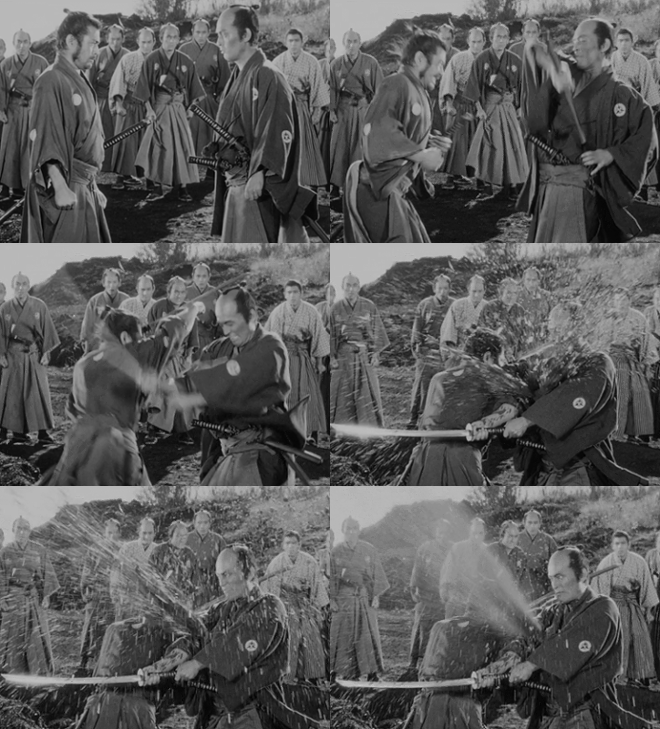
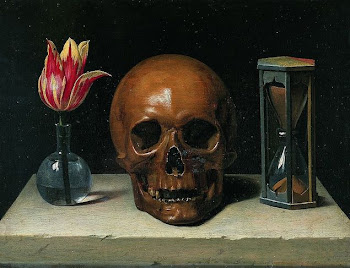
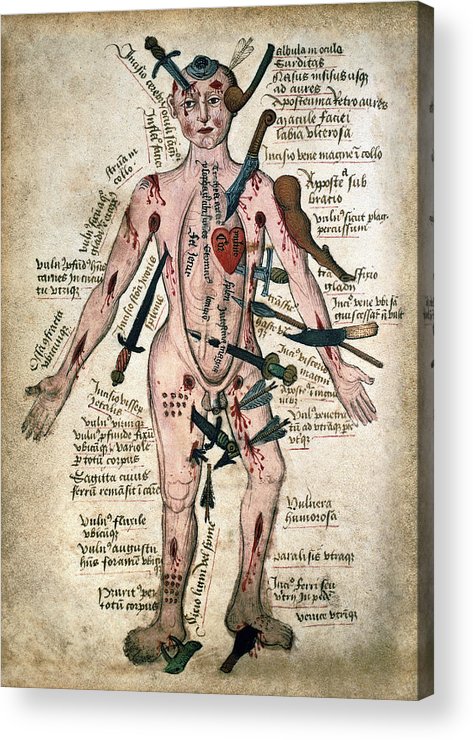
Not Another Death and Dismemberment Table


I did some research and it seems like (approximately) everyone and their mother made a Death and Dismemberment table way way back in the early 2010’s. Far be it from me to let an old topic rest; here’s my take on both death and dismemberment.

When a character is reduced to 0 HP, they make a save vs. death, with a penalty equal to the amount of damage they took from the killing blow. Wearing a helmet gives a +1 bonus to this save. If the character fails, they die. If they succeed they roll on the table.


Unless otherwise specified, a character that rolls on the table must take a 10-minute rest, at the end of which they regain 1 HP.


1
Severe trauma. Reduce a random ability score by 1d4. You fall unconscious for 1 turn and will die unless someone treats your wounds. An ally can roll under their intelligence to stabilize you. If you can make it back to town, you are out of commission for 1 month plus 1d4 weeks for every point of damage in the attack/trap/etc. that brought you to 0 HP. Remove a d4 for every HD you have. For instance, if you’re a 3rd level character and drop to 0 HP from an attack that did 5 points of damage, you would be out of commission for 2d4 weeks. 
2
Severed limb. Roll 1d4: 1) dominant arm 2) non-dominant arm 3) right leg 4) left leg. Missing or disabled arms cannot hold or carry anything. Missing a leg makes you fall prone and halves your speed. After combat, fall unconscious for 3d6 rounds and bleed to death unless someone treats your wound.
3
Mangled. -1 to attacks, AC, carrying capacity (assuming a stone/slot system), and non-magical healing. Every week, make a save vs. death. If the save is successful, remove one ailment. 
4
Disfigurement. Roll 1d6: 1) lose an eye, -1 to ranged attacks 2) lose an ear, listen checks become out of d12 instead of d6 3) Lose your nose, reduced sense of smell 4) Lose 2d4 teeth, eating will take longer for a little while 5) Horrific scarring, lose 2 points of CHA 6) Cool scar, gain 1 point of CHA. Results 1-4 also reduce CHA by 1
5
Broken bones. Roll 1d6: 1) dominant arm 2) non-dominant arm 3) right leg 4) left leg 5) ribs 6) skull. Broken limbs are ineffective. Cracked ribs reduce your HP by the amount of HD you have. Cracked skull subtracts 1d3 points distributed between INT and WIS and you must spend the next 1d4 turns recovering. If you’re wearing a helmet, a cracked skull becomes a concussion.  It takes 3d4 weeks to heal a bone. 
6
Concussion. Spend the next round in a daze. Subtract d4 distributed between INT, WIS, DEX, and CHA. This effect lasts for 1d6 weeks. The next time you get a Concussion, an additional d4 is subtracted and the effects last twice as long. Wearing a helmet negates a concussion. 
7
Knocked out. Drop what you’re holding and fall unconscious. 
8
Miraculous dodge. In an adrenaline-fueled burst of energy you manage to pull away before the killing blow lands. Treat the hit as a miss. If you are in a situation where you can’t feasibly avoid taking damage, survive with 1 HP. 


Most tables I have seen are meant to be used as an alternative to death—when a PC drops to 0 HP, instead of dying outright they take a roll on the table. For this reason, many tables have at least one “instant death” option, usually differentiated by how much of the body is left and whether or not they’re buried or revived. Many others have similar results, along with several other installments that run along the lines of “die in 3 rounds” or “die in 1d6 rounds unless the wound is treated/cauterized/magically healed” and so on. This is all well and good; after all, old-school D&D ought to be lethal even if you don’t want them to be as lethal as “you die at 0 HP, too bad, make a new character.”

I wanted to take a different approach though. Death should be death—I’m not partial to having installments on the table that are just “death” in various forms or degrees, in part because I feel that it gets too technical and fiddly and also because a lot of that stuff ought to be dictated by what happens in the game and not with a roll on a table. Most people, specifically DMs, can intuitively differentiate deaths caused by taking 2 points of damage from a goblin with a butter knife vs. a max-damage lightning bolt hurled from a storm giant skewering you to the mountainside.


Death is death. When a character gets to 0 HP they save or die. Only by not dying do they roll on the table. “But wouldn’t that just make it a Dismemberment table?” You may be asking, after having read what I just wrote above and seeing that my table doesn’t have any clear “death” results. To that I say: I intentionally and very cheekily titled it “Not Another Death and Dismemberment Table.” But because I am vast and contain multitudes I have deemed it OK that the worst results on the table would lead to death should they go untreated. The point is if you’re looking for a table that will tell you the degree to which your character’s corpse is intact then look elsewhere.

The big thing here that differentiates the NADADT and other DADTs is the save vs. death. In addition to my desire to separate death from the DADT, I also wanted to have the strength of the killing blow factor into the lethality of the attack. If we were to consider HP as ablative “don’t-get-hit points,” then it stands to reason that it’s much easier to die from a “mighty” blow than a “weak” one regardless of how many hit points you have left.


Using a save vs. death with a penalty equal to the killing blow’s damage somewhat neatly folds those two desires together into the same system. Death saves get pretty easy at higher levels (looking at you, dwarves) but hopefully the damage penalty is enough to offset that.

I’m going to consider this a “Version 1.0” of the NADADT because it is absolutely subject to change. I’ve tested it out a bit and so far so good but at the moment I’m only running one game and my players are just too damn smart to die frequently enough for me to thoroughly test the table. Only time will tell what the future has in store...